Why Your Weight Isn’t Dropping Even on a “Perfect” Diet
Eating clean but the scale won’t move? Learn why under-eating, stress, and metabolism stall fat loss, and what actually works instead.

You’ve cleaned up your diet.
You’ve cut sugar.
You’re eating home-cooked food.
You’re exercising more than before.
And yet —
the scale hasn’t moved. Or worse, it moves up.
This is the point where most people quietly give up.
Not because they’re lazy.
But because they don’t understand what’s actually blocking fat loss.
You start questioning yourself:
- Am I cheating without realising it?
- Is my metabolism broken?
- Do I need to eat even less?
- Should I work out harder?
Here’s the uncomfortable truth most diets don’t tell you:
👉 Weight loss failure is rarely about lack of discipline.
👉 It’s usually about following rules that don’t match how your body works.
Weight Loss Is Not Just About Eating Less
For years, we’ve been taught a simple formula:
Eat less + move more = weight loss
If that were true, everyone on a “clean diet” would be lean by now.
But the body doesn’t work on spreadsheets.
It works on signals — hormonal, metabolic, and stress-related.
When weight doesn’t drop despite effort, it’s usually because:
- Your body feels threatened, not supported
- Fat storage is being protected, not released
- Survival hormones are louder than calorie maths
This is why two people can eat the same food and get completely different results.
Before blaming your willpower, you need to look at how your body is responding, not just what you’re eating.
And the most common mistake?
👉 You’re eating too little — for too long.
Eating Too Little Can Stall Fat Loss
This sounds counterintuitive, but it’s one of the biggest reasons weight loss stalls.
When you consistently under-eat:
- Metabolism slows down
- Fat burning hormones drop
- Muscle loss increases
- The body holds on to fat as protection
This is called metabolic adaptation — your body adjusting to survive on less.
It often shows up like this:
- Skipping meals to “save calories”
- Living on salads, fruits, and small portions
- Feeling tired, cold, irritable, or obsessed with food
- Weight staying stuck despite “discipline”
From your body’s perspective, this isn’t a fat-loss phase.
It’s a threat.
So instead of burning fat, your body:
- Conserves energy
- Holds on to stored fat
- Lowers calorie burn quietly
The cruel part?
You feel like you’re failing — when in reality, your body is doing exactly what it’s designed to do.
Fat loss doesn’t happen when the body feels punished.
It happens when the body feels safe enough to let go.
What this means going forward
If you’re eating “perfectly” but your weight isn’t dropping, the solution is not:
- Cutting more food
- Adding more cardio
- Chasing stricter rules
The problem isn’t effort.
It’s strategy.
High Cortisol = Stubborn Fat (Especially Around the Belly)
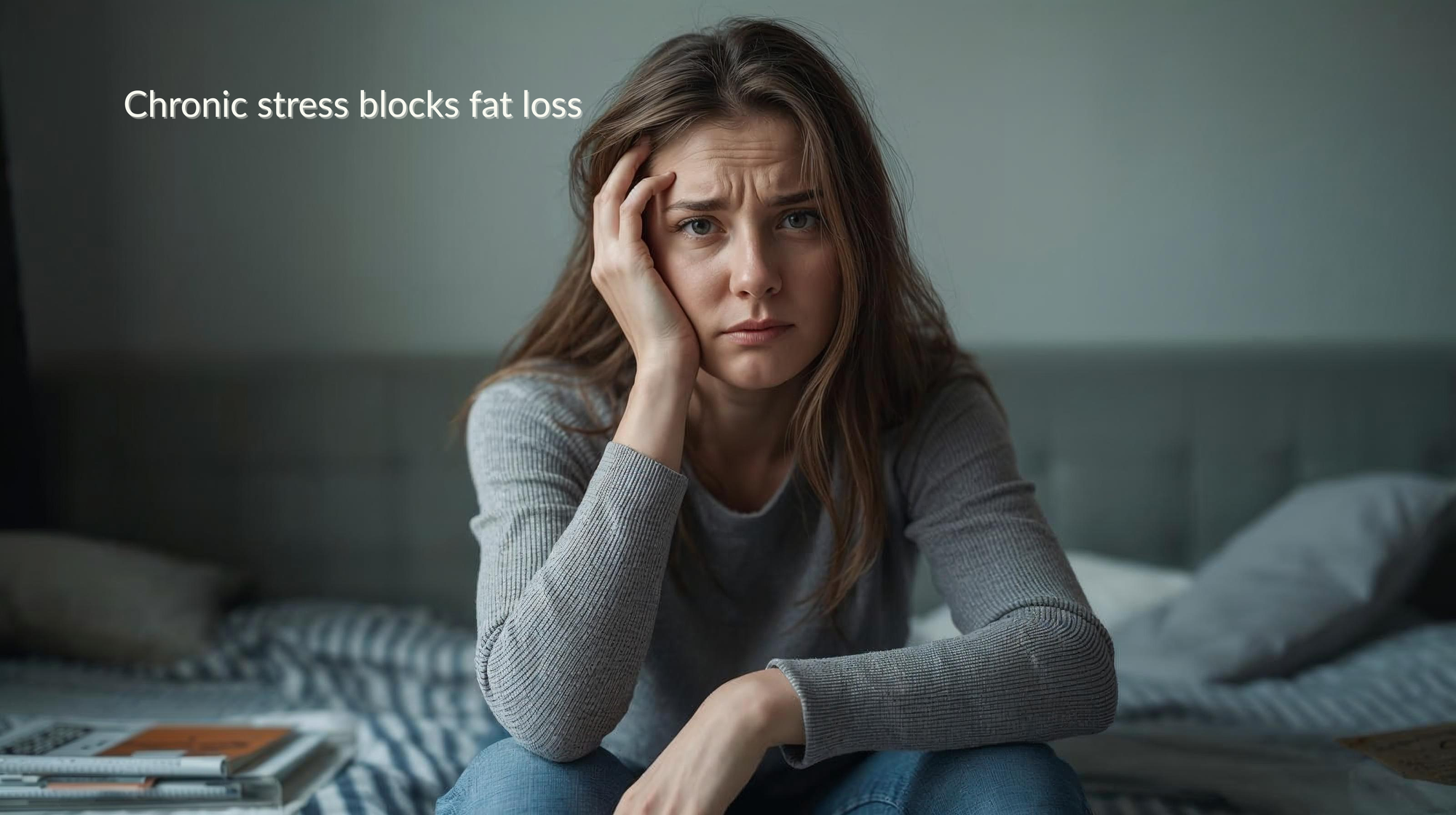
If you’re stressed, tired, under-recovered, or sleeping poorly, fat loss will stall — no matter how “clean” your diet looks.
Here’s why.
When stress is high, your body releases cortisol. Cortisol’s job is not to make you lean. Its job is to keep you alive.
Chronically high cortisol:
- Raises blood sugar
- Increases insulin resistance
- Signals the body to store fat (especially around the abdomen)
- Makes weight loss feel impossible despite effort
This is why many people notice:
- Belly fat that refuses to move
- Weight gain during stressful periods
- Cravings and fatigue despite eating “right”
And no — more workouts don’t fix this.
In fact, excessive high-intensity training + low food + poor sleep raises cortisol even more.
From the body’s perspective:
You’re not trying to get healthy.
You’re running from danger.
Until stress is addressed, fat loss stays locked.
The Scale Is the Wrong Judge of Progress
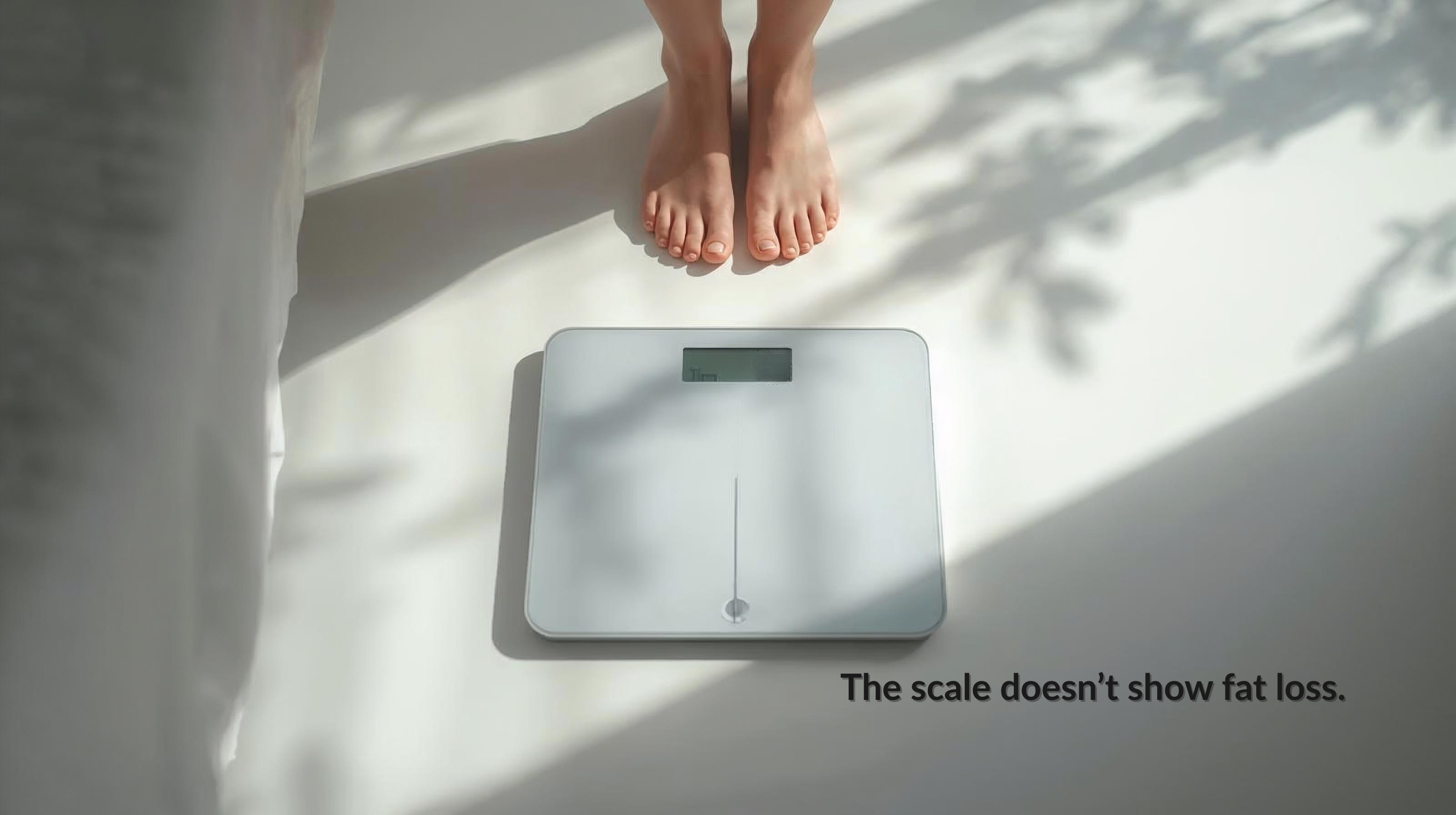
One of the fastest ways to sabotage a fat-loss journey is obsessing over daily or weekly scale changes.
Because the scale doesn’t measure fat.
It measures:
- Water
- Glycogen
- Inflammation
- Digestion
- Hormonal fluctuations
This is why weight can:
- Stay the same while inches drop
- Increase while clothes fit better
- Fluctuate wildly despite consistency
Real fat loss often shows up as:
- Reduced bloating
- Better energy
- Looser clothes
- Improved blood markers
- Lower visceral fat
But if the scale is the only judge, none of this feels like progress.
That’s when people panic, restrict harder, and undo everything that was working.
Fat loss is not linear.
Expecting it to be is setting yourself up to quit too early.
“Healthy” Foods Aren’t Universal
This part makes people uncomfortable — but it matters.
Just because a food is labelled “healthy” doesn’t mean it’s helping your body lose fat.
Common examples:
- Oats
- Fruits
- Smoothies
- Salads
- Multigrain products
These foods can be perfectly nutritious — and still block fat loss for some people.
Why?
- Blood sugar spikes
- Insulin resistance
- Poor gut tolerance
- Inflammation
- Portion distortion
If you’re insulin resistant, stressed, or metabolically sluggish, certain “healthy” foods behave very differently inside your body.
This is why generic meal plans fail.
They ignore:
- Individual metabolic response
- Lifestyle stress
- Sleep quality
- Hormonal health
Nutrition is not about eating “less” or “cleaner.”
It’s about eating appropriately for your body.
And that’s where most people go wrong.
What You Need Instead of Another Diet
If your weight hasn’t dropped despite effort, the answer isn’t more restriction.
What actually works looks far less dramatic — and far more effective.
Sustainable fat loss requires:
- Adequate fueling, not chronic undereating
- Enough protein to protect muscle and metabolism
- Structured meals, not constant grazing or skipping
- Stress regulation, because fat loss is hormonally driven
- Consistency over intensity, not short bursts of discipline
This isn’t about being perfect.
It’s about sending the right signals to your body — signals that say you’re safe, nourished, and supported.
That’s when fat loss starts to happen naturally.
If You’re Expecting Fast Results, This Isn’t for You
Let’s be honest.
If you’re looking for:
- Extreme calorie cuts
- Quick fixes
- Detoxes
- “Lose 5 kg in 10 days” promises
This approach will frustrate you.
Real fat loss:
- Is not linear
- Includes pauses and plateaus
- Requires patience and consistency
But it also:
- Protects your health
- Improves energy and hormones
- Prevents rebound weight gain
This is for people who are done cycling through diets and want lasting change, not temporary control.
You’re Not Failing — You’re Under-supported
If you’ve been:
- Eating “perfectly” with no results
- Blaming yourself for a stalled scale
- Wondering why nothing seems to work anymore
The problem isn’t effort.
The problem is trying to fix a complex biological system with generic advice.
Ready to Stop Guessing and Start Seeing Results?
You don’t need another plan.
You need the right plan — one that works with your body, not against it.
👉 If your weight hasn’t dropped despite genuine effort, it’s time to stop guessing.
👉 Book a personalised nutrition consultation and let’s identify what’s actually blocking your progress.
Frequently Asked Questions
Q1. Why is my weight not dropping even though I’m eating healthy?
Because eating healthy doesn’t automatically mean eating appropriately for your body. Factors like under-eating, stress, poor sleep, hormonal imbalance, insulin resistance, and metabolic adaptation can stall fat loss even on a clean diet.
Q2. Can eating too little stop weight loss?
Yes. Consistently eating too little can slow your metabolism, increase muscle loss, and raise stress hormones like cortisol. When the body feels under-fuelled, it holds on to fat as a survival response.
Q3. Why does my belly fat not reduce despite exercise and dieting?
Chronic stress, poor recovery, and high cortisol levels often lead to stubborn abdominal fat. In such cases, more exercise and stricter dieting can actually worsen fat retention instead of reducing it.
Q4. Is the weighing scale a reliable way to track fat loss?
Not always. The scale reflects water, inflammation, digestion, and hormonal fluctuations, not just fat. Improvements in inches, energy levels, body composition, and health markers are often better indicators of real progress.