Why January Weight-Loss Fails for Most People
Most January weight-loss plans fail within weeks. Learn the real reasons diets fail in January and how to lose weight sustainably.
January is the most popular month to start a diet.
And statistically, it’s the month where most people quit.
Not because they’re lazy.
Not because they “lack willpower.”
But because January diets are usually built on panic, guilt, and unrealistic expectations.
December ends. Clothes feel tighter. Photos sting. Someone says, “From Monday, I’m starting clean.”
And suddenly the rules appear:
- No sugar
- No rice
- No eating out
- No flexibility
It feels disciplined. It feels serious.
And it collapses within weeks.
If you’ve ever started a diet in January and stopped by February, this isn’t a motivation problem.
It’s a strategy problem.
Let’s break this down properly.
The Real Reason January Diets Fail
Most January weight-loss plans fail for the same predictable reasons.
1. Too Many Rules, No System
People jump into extreme plans: detoxes, rigid meal charts, 1200-calorie targets.
Rules rely on motivation. Systems don’t.
Motivation fades fast. A system carries you through low-energy days, work stress, social events, and real life.
2. Trying to Undo Months in Weeks
Weight gain didn’t happen between Christmas and New Year.
But January diets are designed like it did.
When the body is pushed too hard too fast, it responds with:
- Fatigue
- Cravings
- Bloating
- Hormonal resistance
That’s not “weakness.” That’s biology.
3. Ignoring Digestion, Sleep & Hormones
Most people start January already dealing with:
- Acidity
- Constipation
- Water retention
- Poor sleep
Then they add restriction on top of dysfunction.
If digestion and recovery aren’t fixed first, fat loss becomes a fight — not a process.
4. Copy-Paste Diets
What worked for a reel, a friend, or a celebrity is not designed for your metabolism, schedule, or health history.
Generic plans create generic failures.
This is why January weight loss based on extremes fails for most people, every single year.
What Actually Works (And Why Most People Ignore It)
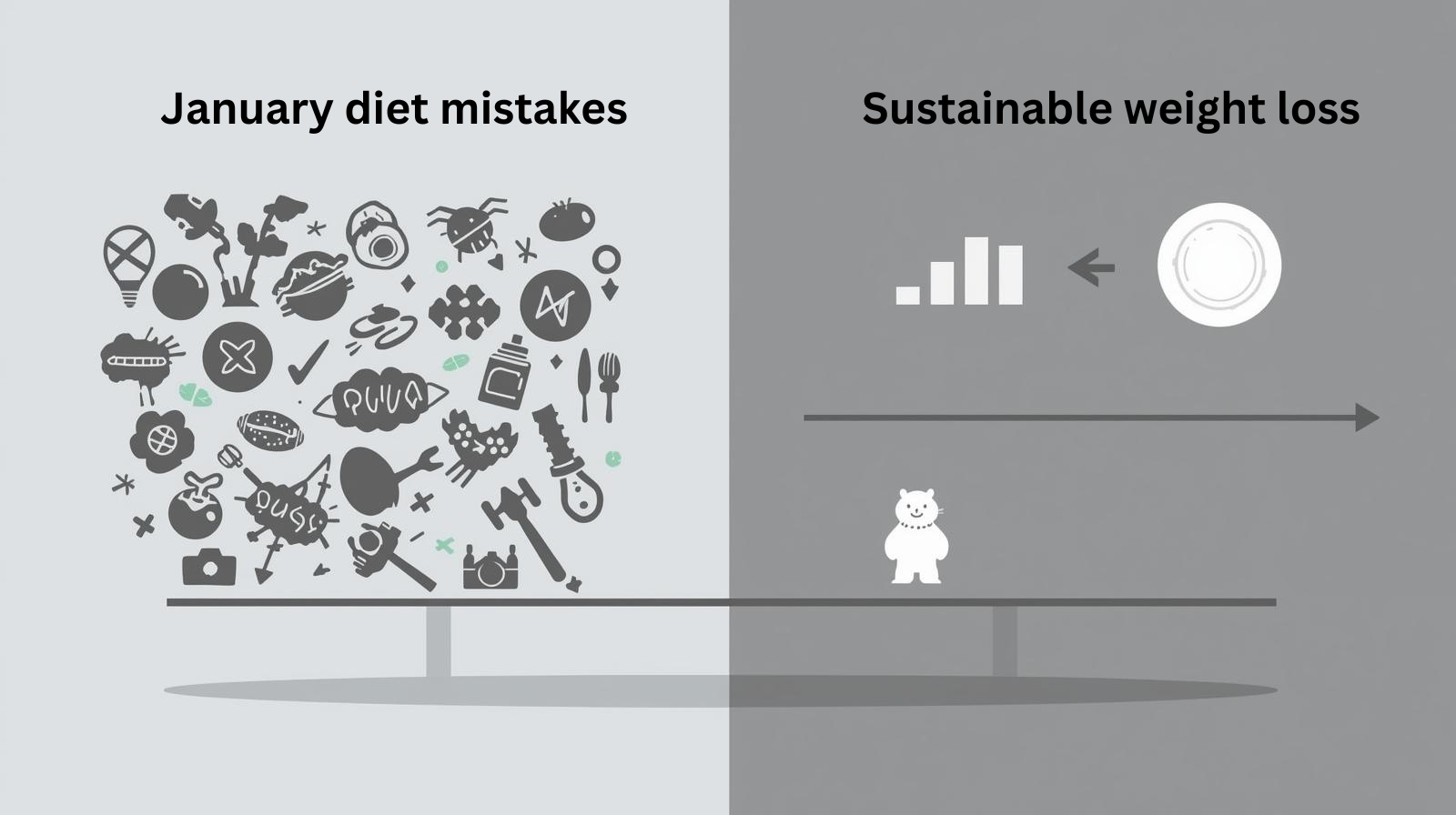
Sustainable weight loss doesn’t look dramatic in the first week — and that’s exactly why it works.
Here’s what actually delivers results:
• Gradual Calorie Correction
Not starvation. Not “eat nothing till dinner.”
Just enough structure to create a consistent, manageable deficit.
• Protein and Fibre First
Before cutting carbs, fats, or joy from your life, most people need to:
- Increase protein
- Improve fibre intake
- Stabilise meals
This alone reduces cravings and binge cycles.
• Fix the Gut Before Forcing Fat Loss
Bloating, acidity, constipation, and fatigue are signals — not inconveniences.
Ignoring them slows progress and increases drop-outs.
• Realistic Timelines
If someone promises extreme weight loss in 30 days, what they’re selling is burnout — not health.
The goal is not fast loss.
The goal is maintainable loss.
January Is Not a Reset — It’s a Continuation
Your body doesn’t know it’s January.
It doesn’t reset because the calendar changed.
It responds to what you consistently do — not what you promise.
Health is not seasonal.
Weight loss is not a New Year ritual.
And your progress doesn’t need a dramatic starting date.
January rewards people who plan, not people who rush.
Who Should Not Start a Diet in January
Let’s be honest.
January is not for:
- People chasing instant results
- People unwilling to adjust habits
- People looking for shortcuts, detox teas, or punishment diets
Those approaches fail every single year.
But January is powerful if:
- You want structure over chaos
- You’re ready for consistency, not extremes
- You want guidance instead of guessing
That’s where real change starts.
The Right Way to Start (If You’re Serious)
A successful January start looks boring on the outside and powerful underneath:
- Structured meals, not restrictions
- Flexibility, not fear
- Progress tracking beyond just the scale
- Support when motivation dips
That’s how results last past February.
Final Thought
You don’t need January motivation.
You need a system that works even when motivation disappears.
If you’re tired of starting over every year, the solution isn’t trying harder.
It’s starting smarter.
January consultations are now open.
Start the right way — with a plan that adapts to your body, lifestyle, and reality.
Call or WhatsApp +917057063984