Eating Less but Not Losing Weight? Here’s Why
Eating less doesn’t always lead to fat loss. Learn why under-eating, stress, and poor meal structure can stall progress — and what works instead.
If you’re eating less, trying to stay disciplined, and still not seeing results, you’re not alone.
This is one of the most common concerns I hear during consultations. People cut portions, skip snacks, avoid indulgences, and “do everything right” yet the scale barely moves. Energy drops, hunger feels constant, and frustration slowly builds.
At this stage, most people assume the problem is them.
They believe they are not being strict enough, consistent enough, or disciplined enough.
But here’s what’s often missed:
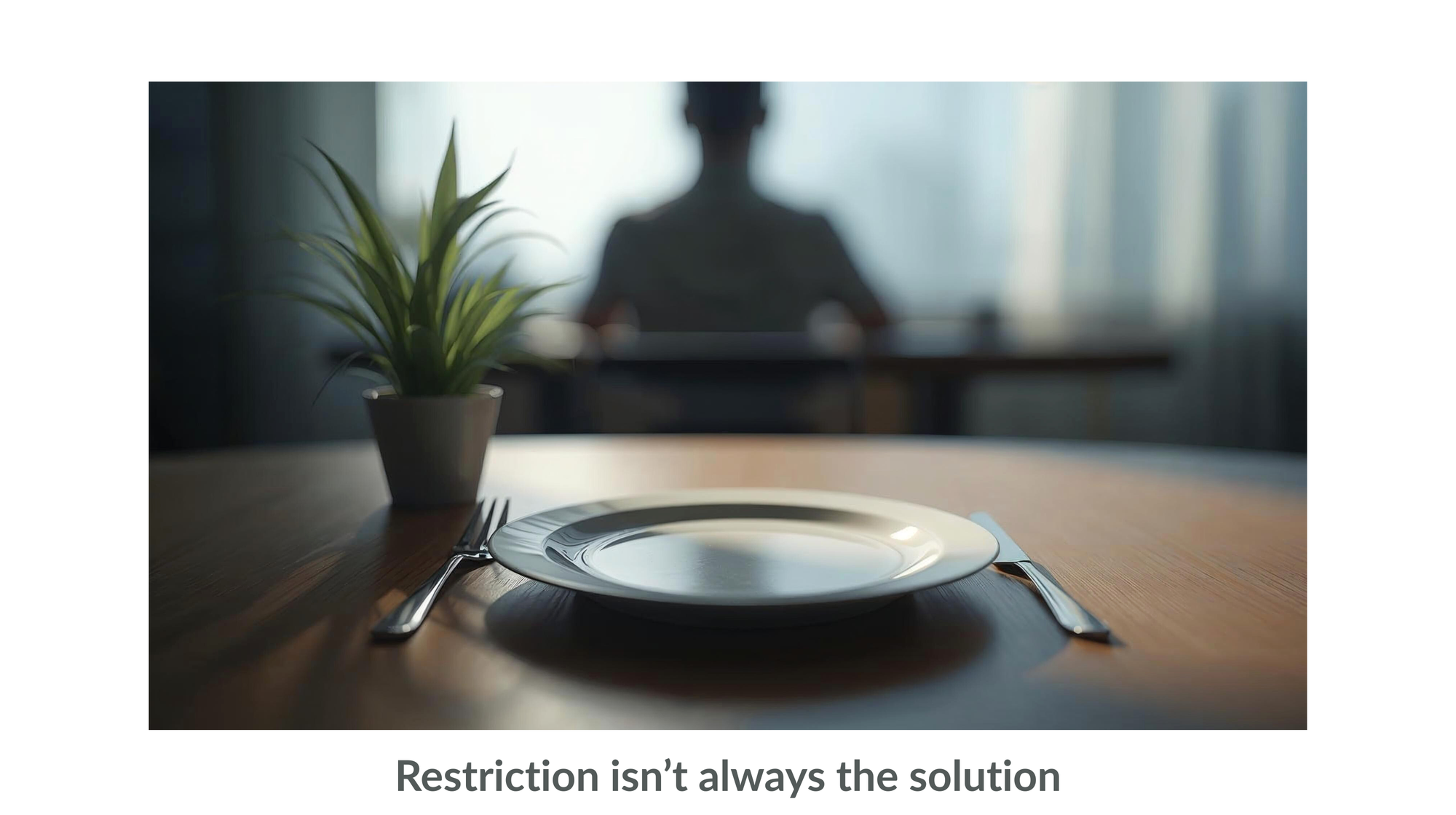
Eating less is not always the solution to fat loss.
In some cases, it’s the very reason progress stalls.
Fat loss isn’t just about reducing food. It’s about how the body responds to restriction over time. And when that response is driven by stress or deprivation, eating less can quietly work against you.
Eating Too Little Can Backfire
The idea that eating less automatically leads to faster fat loss sounds logical but the body doesn’t work on simple math.
When food intake stays too low for too long, the body shifts into protection mode. Energy levels drop, hunger signals intensify, and the body becomes more efficient at conserving energy instead of releasing it.
This isn’t the body being stubborn.
It’s the body doing exactly what it’s designed to do: protect itself.
Some common signs of this include:
- Persistent fatigue
- Feeling cold or drained
- Strong cravings despite “clean eating”
- Slower or completely stalled progress
In this state, fat loss becomes harder, not easier. The body prioritises survival over change.
This is why many people feel stuck despite eating less than they ever have before. Ongoing deprivation doesn’t create sustainable fat loss — it creates resistance.
Fat loss works best when the body feels supported, not deprived.
Stress Can Block Fat Loss — Even If Your Diet Looks “Perfect”
Food is only one part of the fat-loss equation.
Stress is another and it’s often the more powerful one.
When the body is under constant stress, it doesn’t prioritise fat loss. It prioritises coping.
This stress doesn’t always come from obvious sources like work pressure or emotional strain. It can also come from the way you’re dieting.
Common stressors include:
· Eating too little for too long
· Skipping meals regularly
· Over-exercising while under-fuelled
· Trying to be “perfect” every day
To the body, all of this registers as stress.
When stress stays high, the body becomes more focused on holding on to energy rather than letting it go. This can show up as:
· Stubborn fat despite effort
· Increased water retention
· Poor sleep
· Slower recovery
· Feeling “puffy” or inflamed
This is why some people eat very clean, exercise regularly, and still feel stuck. The body is not responding to food alone it’s responding to the overall environment it’s in.
A stressed body doesn’t change easily.
It protects first, adapts later.
This doesn’t mean stress needs to be eliminated completely. That’s unrealistic.
But it does mean fat loss works better when the body feels supported, nourished, and regulated — not constantly pushed.
When stress is addressed, fat loss often becomes easier without eating even less.
Eating Less Often Means Eating Poorly Structured
Many people who say they’re “eating less” aren’t actually eating in a way that supports fat loss.
They’re eating less often, skipping meals, or piecing together foods without structure.
This usually looks like:
· A rushed or skipped breakfast
· Long gaps between meals
· Very small lunches
· Low protein across the day
On the surface, it feels disciplined.
Inside the body, it creates instability.
Without regular, well-balanced meals, blood sugar fluctuates more than people realise. Energy dips, focus drops, and hunger builds quietly in the background. By evening, cravings are stronger, portions grow, and decision-making becomes harder.
This cycle isn’t about lack of control.
It’s about lack of structure.
Protein is especially important here. When meals are low in protein, the body struggles to feel satisfied and supported. Hunger returns quickly, muscle mass is harder to maintain, and fat loss becomes less efficient over time.
This is why many people feel like they’re “hardly eating” but still:
· Feel hungry all day
· Think constantly about food
· Overeat later without intending to
Eating less calories is not the same as nourishing your body properly.
Fat loss works better when meals are:
· Regular
· Balanced
· Adequate in protein
· Built to support energy, not just reduce intake
Structure doesn’t mean eating more food — it means eating in a way the body can actually use.
The “Good Weekdays, Messy Weekends” Pattern
A common reason fat loss stalls, even when effort feels high, is inconsistency disguised as discipline.
Many people are very strict from Monday to Friday. Meals are controlled, portions are smaller, and routines feel “on track.” But by the weekend, exhaustion sets in. Social plans, lack of structure, and mental fatigue make it harder to stay consistent.
The result often looks like:
· Tight control during the week
· Looser eating on weekends
· Starting over again every Monday
On paper, this can still feel like you’re “mostly doing well.”
In reality, the body experiences it as repeated cycles of restriction followed by compensation.
This pattern doesn’t mean someone lacks willpower.
It usually means the plan itself is too rigid to sustain.
When weekdays require extreme discipline, weekends become recovery periods — not just socially, but physically and mentally. Over time, this back-and-forth can cancel out progress, increase stress, and make fat loss feel unpredictable.
Consistency doesn’t mean perfection.
It means creating a way of eating that holds up across all days of the week.
A plan that only works on weekdays isn’t sustainable, it’s temporary.
What Actually Works Instead
If eating less, trying harder, and being stricter hasn’t worked, the answer isn’t more discipline.
It’s a different approach.
Sustainable fat loss works when the body feels supported, not constantly challenged. That means shifting the focus away from restriction and towards structure.
Structure looks like:
· Eating enough to support energy and recovery
· Regular, balanced meals that include adequate protein
· A routine that works on both weekdays and weekends
· Flexibility built in, so one off-plan meal doesn’t derail everything
This kind of approach reduces stress on the body and removes the cycle of guilt and compensation. Instead of constantly starting over, progress becomes steadier and easier to maintain.
Importantly, structure allows for restarts.
It recognises that imperfect days will happen — and plans for them.
When the body feels safe, fuelled, and regulated, fat loss becomes less of a battle. Hunger stabilises, energy improves, and consistency becomes more natural rather than forced.
Fat loss doesn’t come from eating the least possible amount of food.
It comes from eating in a way your body can sustain.
If eating less hasn’t brought the results you expected, it doesn’t mean you’ve failed. More often, it means the approach wasn’t suited to how your body actually works.
Fat loss becomes less frustrating when the focus shifts from constant restriction to understanding, structure, and consistency. When meals are balanced, stress is managed, and flexibility is built in, progress tends to follow — without the exhaustion that comes from always trying to be “perfect.”
Sometimes, feeling stuck is simply feedback.
Not a sign to push harder, but a sign to adjust.
Looking at how you’re eating — not just how much — is often the first step towards sustainable change.
Need Personalised Guidance?
If you’ve been eating less, trying your best, and still feel stuck, personalised guidance can help identify what your body actually needs — instead of guessing or pushing harder.
You can connect with us here:
📱 WhatsApp: [+917057063984 or click-to-Whatsapp]
📅 Book a consultation: https://calendly.com/dietcliniccolva/30min