Cortisol Belly: Why Stress Is Making You Gain Fat
Struggling with stubborn belly fat? Chronic stress and high cortisol may be the real cause. Learn the science, symptoms, and how to fix cortisol belly naturally

Most people blame carbs, age, or slow metabolism for their belly fat.
But for a growing number of Indians, especially women between 30 and 45, the real trigger is something almost nobody checks: chronically elevated cortisol.
Cortisol is your body’s stress hormone.
When it stays high for long periods, your body shifts into a mode where it stores fat instead of burning it, especially around the abdomen.
This is why people who “eat clean,” walk daily, or follow a diet still see stubborn belly fat.
If your belly fat is new, disproportionate, or not reducing despite effort, this is the missing link.
Why Cortisol Belly Hits Women 35–45 the Hardest
This age group sits in the perfect storm of:
- Work pressure and deadlines
- Home responsibilities
- Irregular meal timings
- Poor sleep routines
- Caffeine dependence
- Emotional eating
- Early signs of perimenopause
- High workload with zero recovery
- Over-exercising while under-eating
- Non-stop digital stimulation
Your body doesn’t distinguish between real danger and daily stress.
It reacts the same way — with cortisol.
And persistent cortisol leads directly to belly fat.

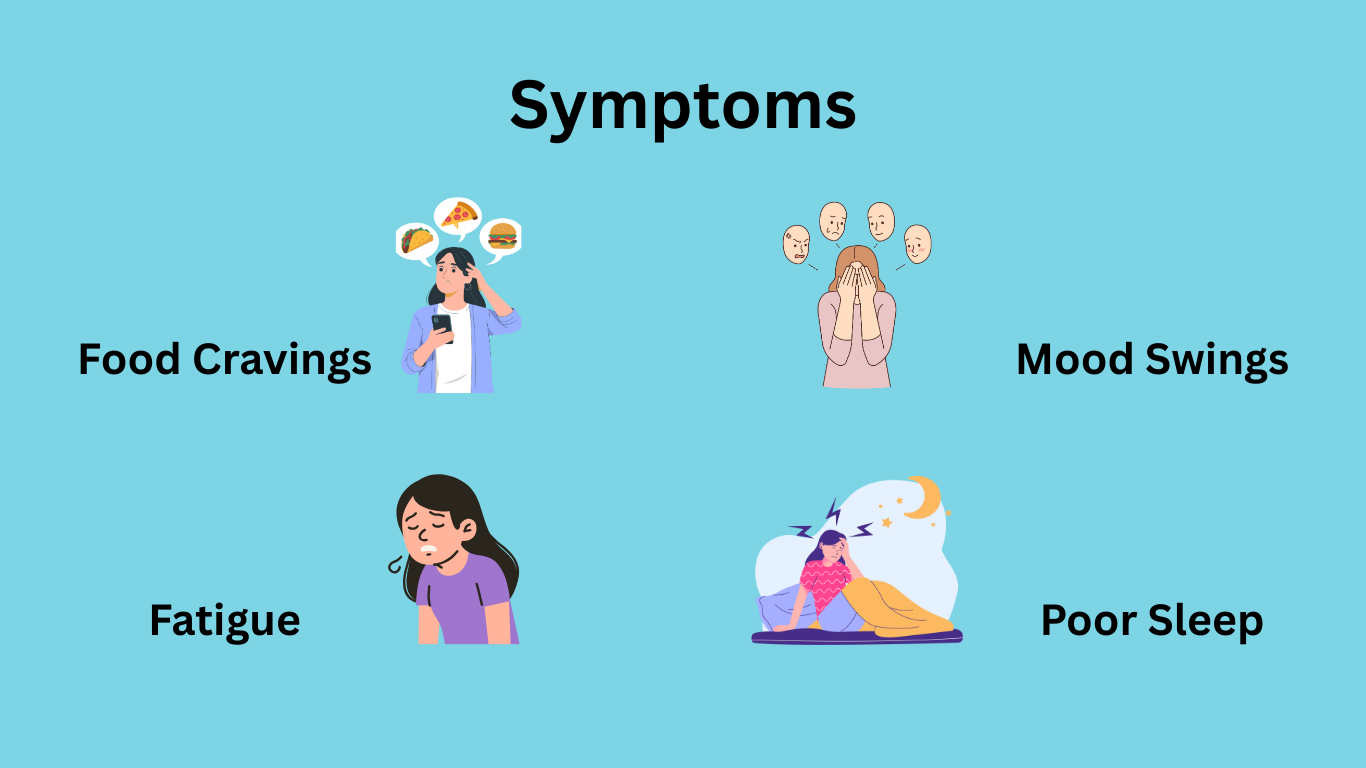
Signs You Have a Cortisol Belly
You’re likely dealing with cortisol-driven fat if you notice:
- Belly fat increasing faster than the rest of the body
- Relatively lean arms and legs
- Cravings for salty or crunchy foods in the evening
- Waking up feeling tired
- Feeling “tired but wired” at night
- Weight gain despite calorie control
- Late-night snacking
- Afternoon crashes
- Shallow or broken sleep
If these sound familiar, diet is not your main issue — rhythm is.
How Cortisol Creates Stubborn Belly Fat (The Real Physiology)
Here’s what actually happens inside your body:
1. More Fat Receptors in the Belly
Abdominal fat cells have more cortisol receptors.
So the moment cortisol rises, belly fat increases first.
2. Insulin Sensitivity Drops
Your body becomes slower at using sugar for energy → more fat storage.
3. Appetite Increases — Especially for Salty and Sweet Foods
Stress biology pushes you toward “quick fuel.”
This is why evening cravings climb on stressful days.
4. Sleep Gets Disrupted
Even small increases in cortisol affect sleep quality.
Poor sleep → higher cortisol → more belly fat → repeat cycle.
5. Muscle Breakdown Increases
Your body preserves fat and breaks down muscle under chronic stress.
Less muscle = slower metabolism = more fat gain.
This is why clean eating alone doesn’t solve the problem.
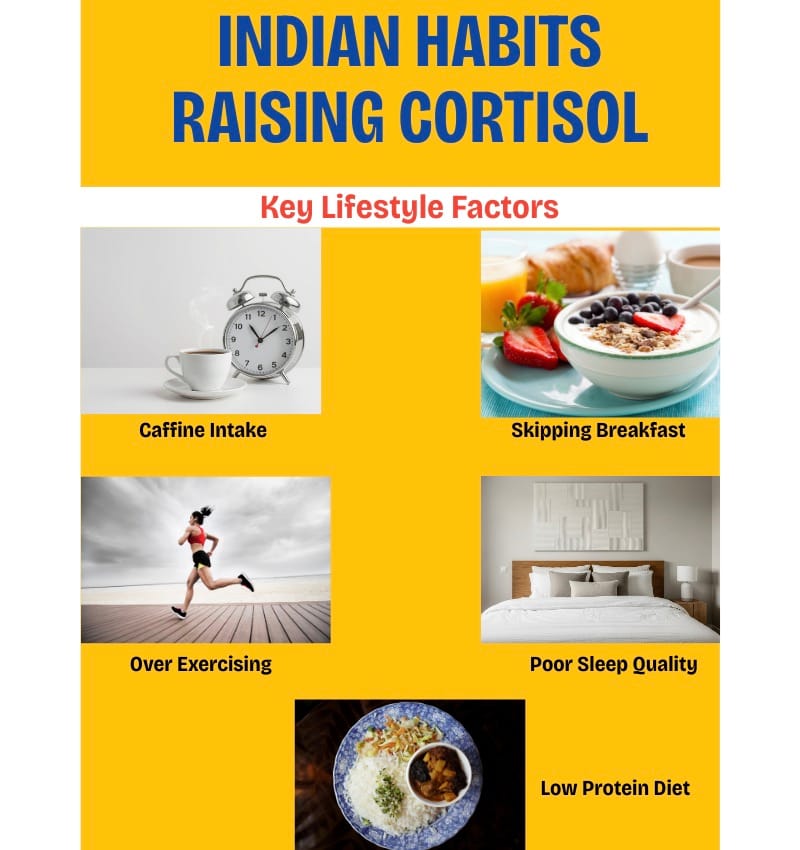
Everyday Indian Habits That Raise Cortisol
These are the exact patterns that keep your clients stuck:
1. Skipping breakfast, eating first meal at noon
This keeps cortisol elevated for hours.
2. Evening tea or coffee
Caffeine late in the day spikes cortisol exactly when it should be dropping.
3. Under-eating all day, overeating at night
Classic Indian pattern — terrible for cortisol.
4. Poor protein intake
Low protein destabilises blood sugar → cortisol spikes.
5. Sleeping late
Even a consistent 11:30 pm bedtime disrupts cortisol reset.
6. Too much HIIT or cardio
Your body interprets this as stress, not fat loss.
7. Stress snacking
Salt, crunch, sugar = dopamine hit → cortisol cycle worsens.
8. Zero “down-time”
Your nervous system never enters recovery mode.
All these habits create a perfect environment for stubborn belly fat.
How to Reduce Cortisol Naturally (What Actually Works)
You don’t reduce cortisol by doing more.
You reduce it by correcting the rhythm of your day.
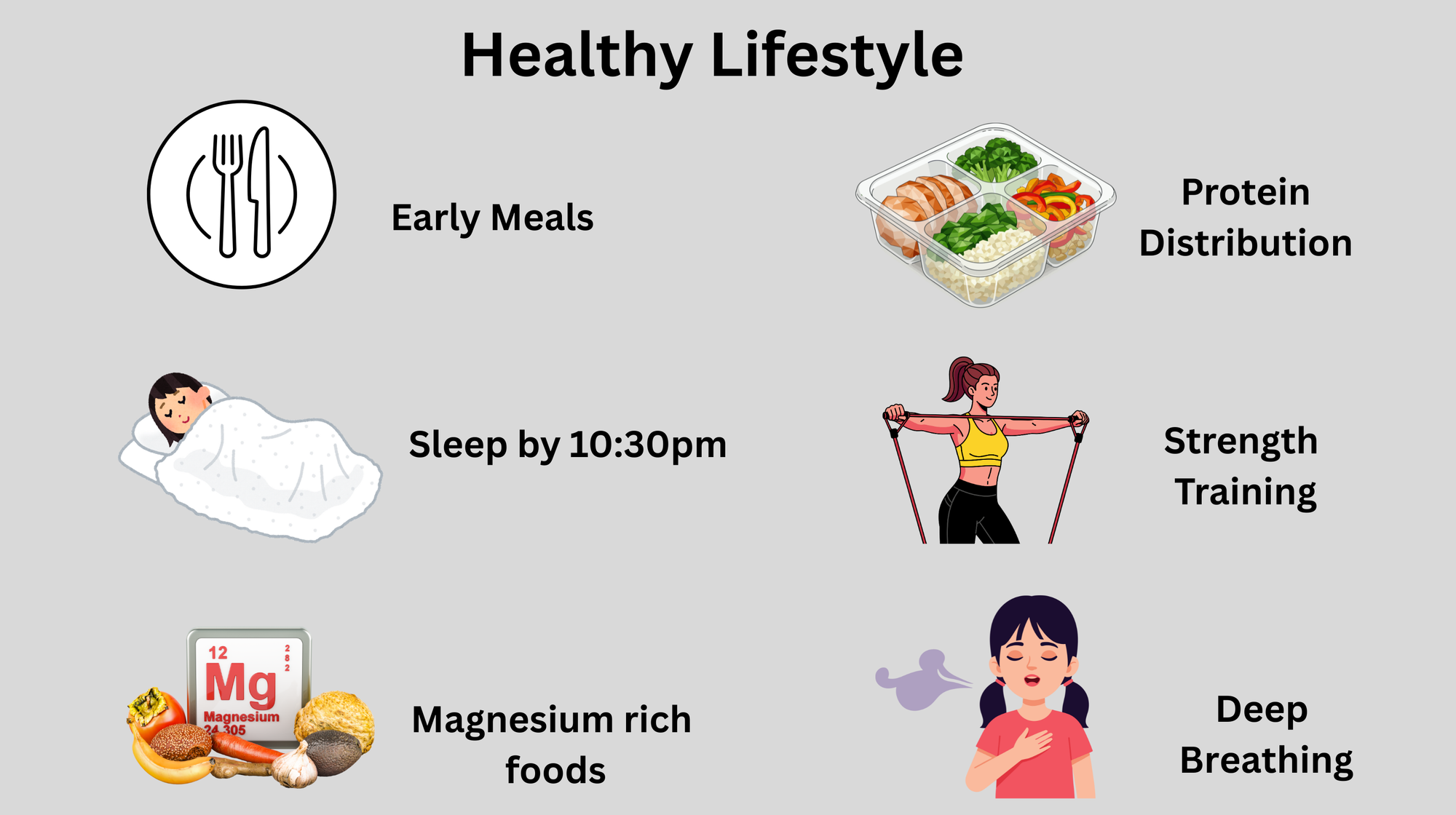
1. Eat Your First Meal Within 60–90 Minutes of Waking
This stabilises blood sugar and immediately lowers cortisol load.
2. Spread Protein Across 3–4 Meals
Target 20–25g per meal — not just at dinner.
3. Prioritise Sleep Before 10:30 pm
This is when cortisol resets.
Miss this window and the next day becomes harder.
4. Replace Evening Chai With Lighter Options
Herbal tea, warm lemon water, fennel tea — anything without caffeine.
5. Switch to Low-Intensity or Strength Training
On high-stress days, HIIT backfires.
Strength training + walks = better results.
6. Add Magnesium-Rich Foods
Include spinach, almonds, banana, pumpkin seeds as they help regulate stress hormones.
7. 20 Minutes of Daily “Down-Regulation”
Not yoga.
Not meditation.
Just quiet time, slow breathing, or sunlight exposure.
Your nervous system needs this to reset.
These steps are simple, but the impact is significant.
A Real Case Example (Anonymous)
A client in her early 40s came in with:
- Stubborn belly fat
- Poor sleep
- Evening cravings
- Fatigue
- Irregular meals
- Erratic work hours
Her calories were not the problem.
Her cortisol rhythm was.
We corrected:
- First meal timing
- Sleep schedule
- Protein distribution
- Evening caffeine
- Excessive cardio
Within weeks, belly fat reduced, cravings dropped, and her energy stabilised.
When you treat the root — the results follow.
If Your Belly Fat Isn’t Reducing, Stop Guessing — Fix the Root Cause
People waste months switching diets, doing more cardio, and cutting foods.
If your belly fat is new, stubborn, or increasing despite effort, you need a personalised approach — not another generic “healthy eating” plan.
You have two effective options:
1. 100 Days Transformation Plan
Designed to correct:
- Cortisol rhythm
- Belly fat accumulation
- Sleep cycles
- Stress chemistry
- Cravings
- Metabolic slowdown
- Eating patterns
This plan transforms people who feel stuck even after “doing everything right.”
2. Personal Consultation (Online or In-Person – Margao–Colva, Goa)
With a detailed assessment, we understand:
- Whether cortisol is your main blocker
- Where your routine is going wrong
- What specific changes will reduce stress-driven fat
- How to fix eating patterns without extreme changes
You can book anytime on WhatsApp or via Calendly.

(Straight, Science-Based Answers)
1. Can you reduce cortisol belly with diet alone?
No. You need timing + sleep + stress rhythm correction.
2. How do I know if my belly fat is from cortisol?
If your belly grows faster than the rest of your body — especially during stressful periods — that’s cortisol.
3. Is walking enough to reduce cortisol belly?
Helpful but not sufficient.
Walking + correct routine works. Walking alone doesn’t.
4. Is HIIT good or bad for cortisol belly?
Bad if you’re stressed.
HIIT spikes cortisol further.
Strength training is better.
5. Does skipping breakfast increase cortisol?
Yes. Eating late keeps cortisol elevated for hours.
6. Can supplements fix cortisol belly?
No. Lifestyle correction is the only real fix.
7. How long does it take to see results?
With proper routine: 4–8 weeks.
Without correcting root cause: months or years.
8. Why is belly fat stubborn even with clean eating?
Because timing, sleep, routine, and stress matter more than “eating healthy.”
9. Is cortisol belly common in women 35–45?
Extremely common — this age group is the most affected.
10. What should I fix first?
Sleep timing and first meal timing.
Everything else builds on these two.
If your belly fat hasn’t moved in months, the issue isn’t effort — it’s strategy.
Fix the cortisol cycle and your results will finally match your work.